
|
The
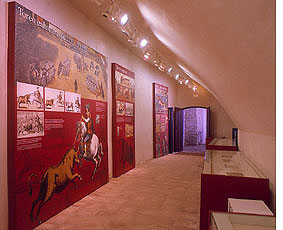
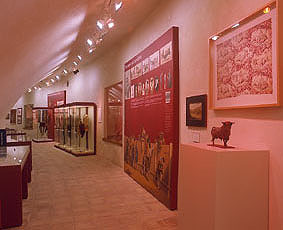
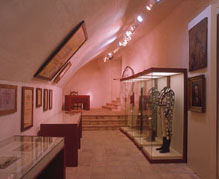
museum of the Ronda Bullring occupies a quarter of the ring
beneath the shade sections. It is currently being extended with
completion scheduled for 2003. The items on display can be divided
into three broad sections: The items are arranged according to these three areas of interest and include paintings, sculptures, graphic art, textiles, objects, historical records and pieces of contemporary art. The aim is to establish a homogeneous discourse that places each item in its own context and highlights its relationship with other items. The Real Maestranza de Caballería its status as a noble and chivalric institution dating back to the conquest of Ronda during the War of Granada; its relationship with the town and contribution to its evolution; and its role in the equestrian arts and the history of bullfighting, both through its training exercises with bulls and the construction of the monumental bullring. The mythical origins and the seismology of bullfighting in the history of universal culture, the phenomenon of its introduction into the Iberian Peninsula and its evolution into a spectacle with rules and regulations, including details of the figures for whom bullfighting is a national pastime. The
role of Ronda and
its significance in the principal bullfighting dynasties, the
Romeros painted by Goya, and the Ordóñez family
and its main representative Antonio Ordóñez, who
gained the admiration of celebrities of the ilk of Hemingway
and Orson Welles. The
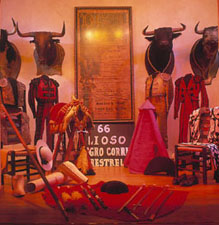
museum contains a rich collection of etchings, engravings, lithographs
and illustrations, including the following: an edition of Francisco
de Goya's «Tauromachy» and the excellent British
Tauromachies by Lake Price, Víctor Adam and Edward Orme;
books, noble deeds, records and engravings related to the founding
of the Real Maestranza de Caballería de Ronda and its
role in the order of knighthood and the equestrian arts; oil
paintings from the 17th, 18th and 19th centuries, old and contemporary
posters by artists such as Arroyo, Cárdenas and Úrculo;
bronzes, low-reliefs and traditional bullfighting instruments.
|

 |
 |
|