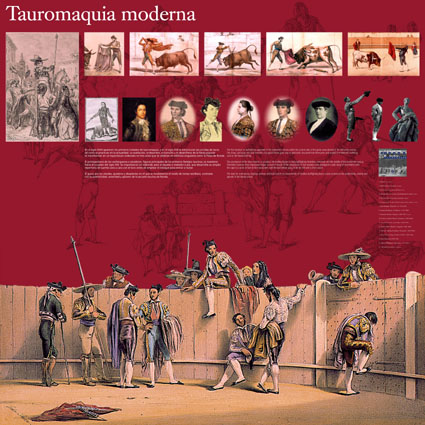
The prominence of the varilargueros, or picadors, the leading
figures of early bullfighting festivities, survived until the
mid-19th century, thereafter gradually being eclipsed by matadors
on foot, who display their skill face to face with the bull
in a variety of formal stages before going in for the kill with
the estoque sword.
The taste for bravura, insolence and swift dodges which characterises
the Sevillian style of bullfighting contrasts with the authenticity,
severity and composure of the Ronda school.